Uncategorized
9 Key Questions To Ask When Choosing A Provider For Mayan (And Other Indigenous) Language Services
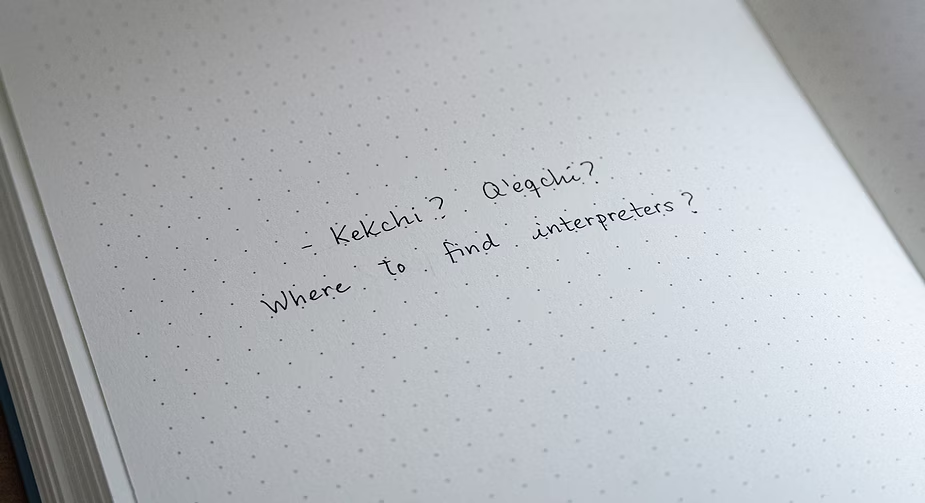
With the increasing number of migrants and asylum seekers who speak Mayan and other Latin American indigenous languages coming to the United States, finding interpreters for indigenous languages is more important now than ever. However, it seems increasingly common for those seeking indigenous language interpreters to hire someone or an organization without asking any questions…
Read MoreCelebrating a Milestone for Mayan Language Interpreter Education
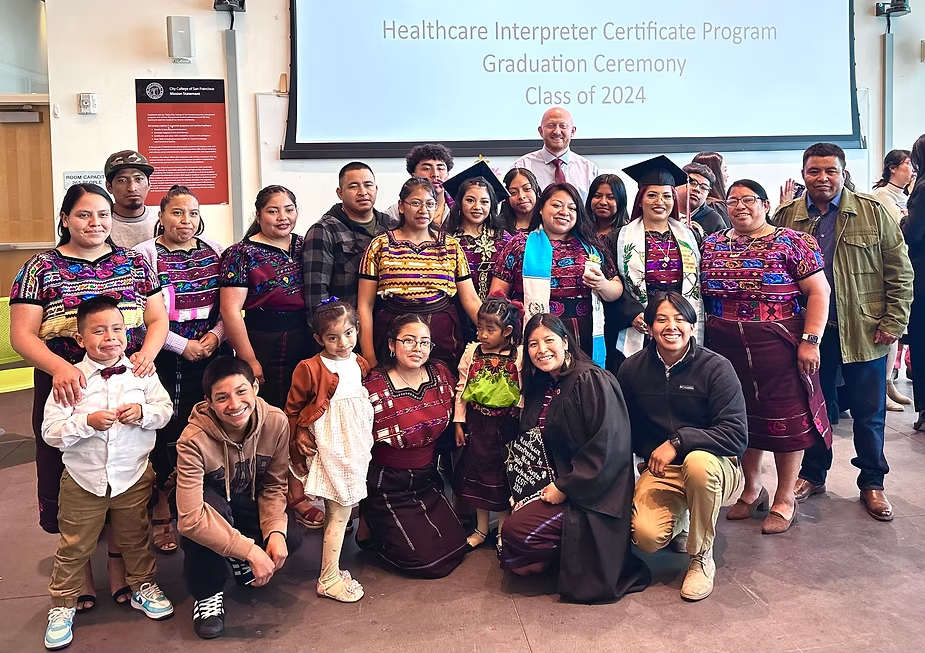
This past weekend, we had the privilege of attending the graduation ceremony for the Healthcare Interpreter Certificate Program at the City College of San Francisco where four Mam speakers achieved the milestone of being the first cohort ever of Mayan language speakers to complete the rigorous program. According to CCSF’s website, this two-semester program is…
Read MoreThe Power of a Voice: Perspectives on the Crucial Need for Interpreters of Indigenous Languages

One of the things that for which we at Maya Bridge are working diligently to advocate and raise awareness is that speakers of indigenous languages are all too often mis-categorized and lumped in with speakers of other languages. This can happen due to several factors, including: – A general lack of awareness about indigenous languages…
Read MoreLanguage Access In The US: What You Need to Know
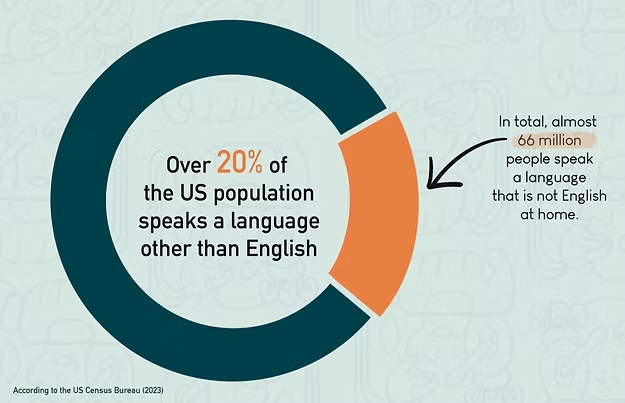
In the United States, millions of people do not speak English. What do they do when they need to attend an immigration hearing or visit the doctor? This is where language access comes in. Language access is an integral part of maintaining equal rights and opportunities for all individuals in the U.S., regardless of their language…
Read MoreWhat Is An Indigenous Language?
What’s the difference between an Indigenous language and a non-Indigenous language? What makes Indigenous languages unique? Both are valid forms of communication, however, they are worlds apart. Indigenous languages are deeply intertwined with the cultural, historical, and environmental contexts of the communities that speak them, reflecting their traditions, beliefs, and connection to the land. Rich…
Read MoreQ’eqchi’ Interpreters and Translators: A Quick Guide
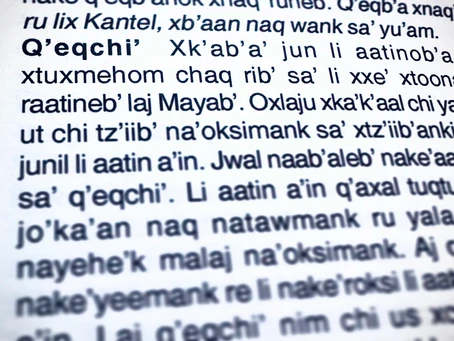
As the Q’eqchi’ people increasingly migrate to the United States for safety, economic opportunities, and a better quality of life, they often face many obstacles, language access being one of them. This is where Q’eqchi’ interpreters step in, helping migrants to integrate safely into their new surroundings. For the Q’eqchi’, whose cultural and linguistic heritage…
Read MoreAn Introduction To Mayan Languages
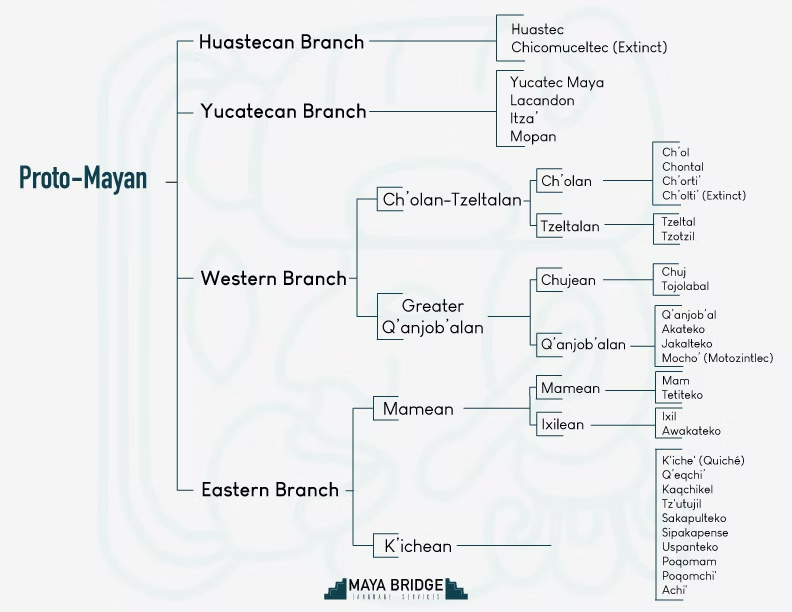
In the context of Latin American Indigenous languages, the term “Mayan” does not refer to a single language, but rather a family of over 30 unique languages spoken throughout Mesoamerica. Contrary to popular misconceptions, Mayan languages are not variants of one singular Mayan language. They can be compared to French, Spanish, Portuguese, Italian, and Romanian,…
Read MoreHere’s Why We Stopped Calling Indigenous Languages “Rare Languages” and Why You Should, Too
In the language industry, “rare” is a term that is often used to describe indigenous languages or other less commonly spoken languages. As Maya Bridge continues to advocate for indigenous language access, we want to ensure that the words we use to describe and talk about indigenous languages don’t convey unintended meanings or misconceptions. We…
Read MoreK’iche’ Interpreters and Translators: A Quick Guide
Since the 1960’s to the 1980’s when K’iche’ Mayans began migrating en masse due to the Guatemalan genocide that took place during the time, the K’iche’ people have continued migrating to the United States for safety, economic opportunities, and a better quality of life. K’iche’ migrants often face many obstacles when integrating into new societies,…
Read MoreIxil Interpreters and Translators: A Quick Guide
As the Ixil people increasingly migrate to the United States for safety, economic opportunities, and a better quality of life, language access is one of the biggest obstacles they face. This is where Ixil interpreters step in, helping migrants to integrate safely into their new surroundings. For the Ixil, whose cultural and linguistic heritage has…
Read More